{{ r.title }}
{{ r.meta }}{{ r.intro }}
{{ g.label }}
- {{ i }}
- {{ s.n }} {{ s.text }}
Tips from the chef
- {{ t }}
Minced, powdered, jarred, hanging in a window: everyone’s got it.
China, India, and America export enough garlic to keep the world running on its fumes, and they need to. It’s a staple of English, Latin American, Korean, Chinese, and of course Italian cooking. Garlic is cheap, easy to use, and easy to grow. Whether you’re making aglio e olio or keeping the vampires away, garlic has you covered.
“Don’t eat garlic or onions, so people won’t be able to tell your low birth by the way you smell.” — Don Quixote
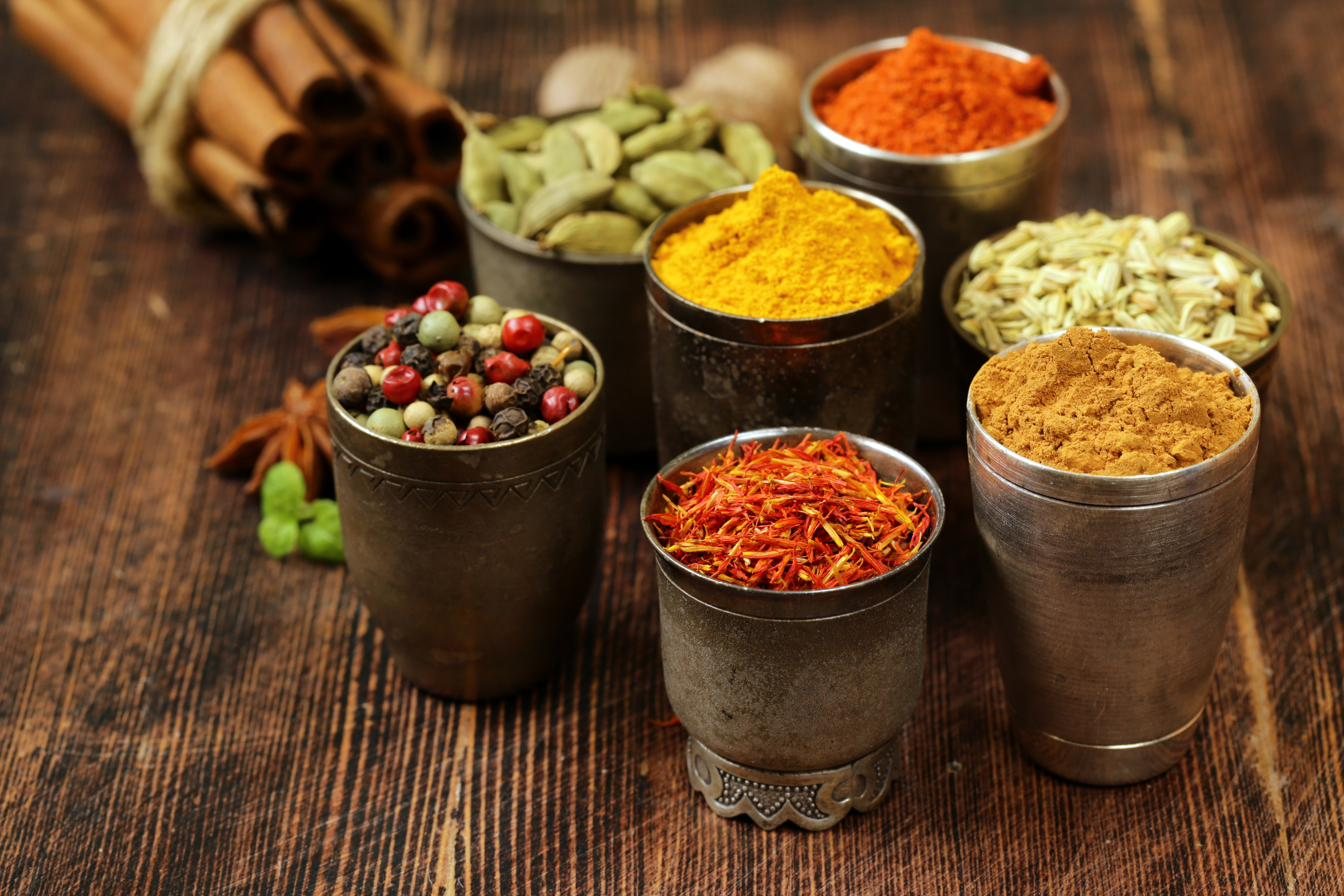
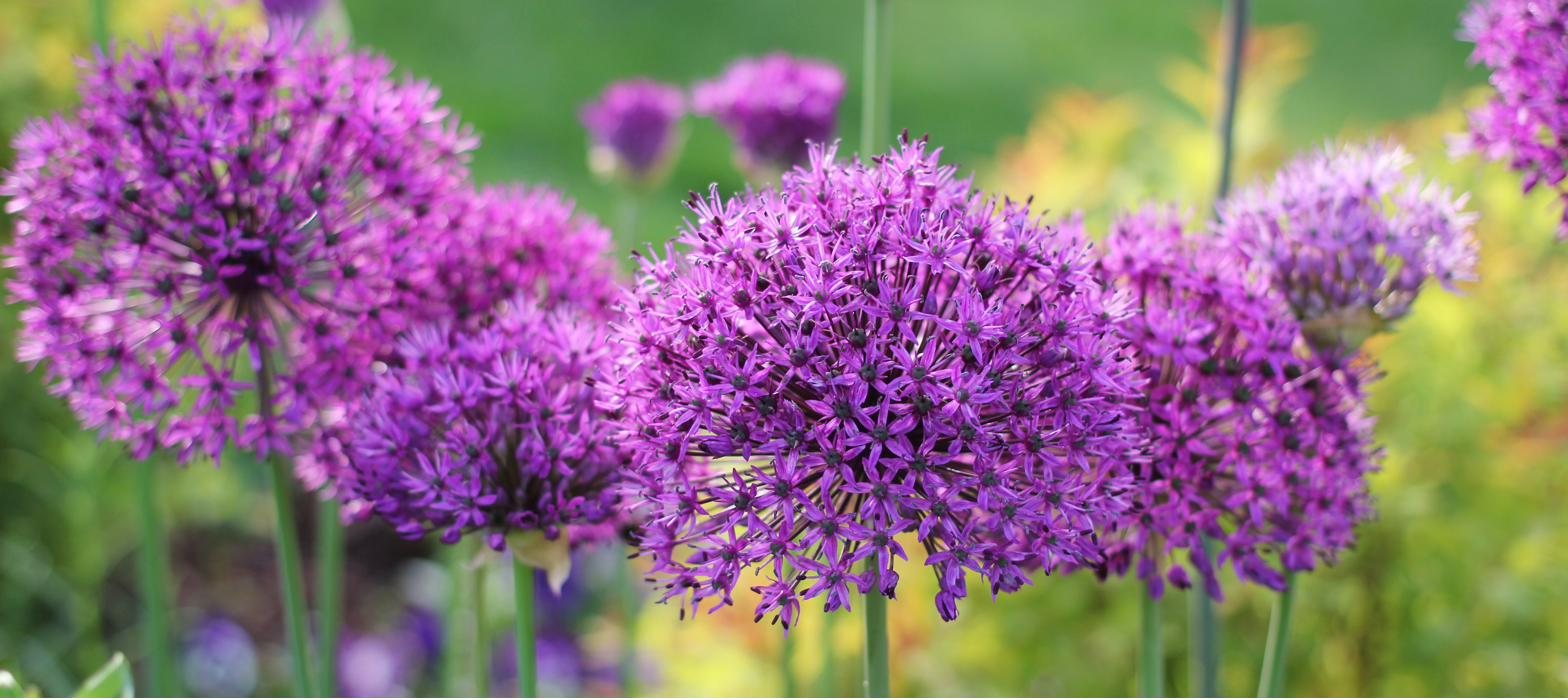
In a world of cinnamon, saffron, and cardamom, garlic is more provincial. Many of its relatives grow as weeds across America, but this “wild garlic” isn’t true garlic. The garlic you buy at the store doesn’t grow wild anywhere; its closest relatives survive only in the remote mountains of Kyrgyzstan. Garlic has no native country, so every country it meets has adopted it.
There is hard evidence that it was first domesticated in Tajikistan, Uzbekistan, Turkmenistan, and northern Iraq. The earliest records come from Mesopotamia: stone tablets from 1600–1700 BCE describe pounding “karsu” (leek) and “hazanu” (garlic) into a spread. Cooks in Babylon and Byzantium chopped and mashed the bulb to release more flavor, and Emperor Nero is credited with inventing aioli.
Garlic spread from the Mediterranean along the trade routes. Egyptians used it in mummification, likely because it covered the smell of the dead. It traveled east to China with Central Asian traders and reached Japan through Korea. When the Spanish brought it to the Americas, domesticated garlic conquered the last of the world.
Latin American cooks took to it generously; Puritan settlements took longer, calling it a “poor man’s treacle.” Today much of the world’s crop grows in places that once disdained it, including China, India, and California, and garlic remains cheap and available to nearly every cook on the planet.
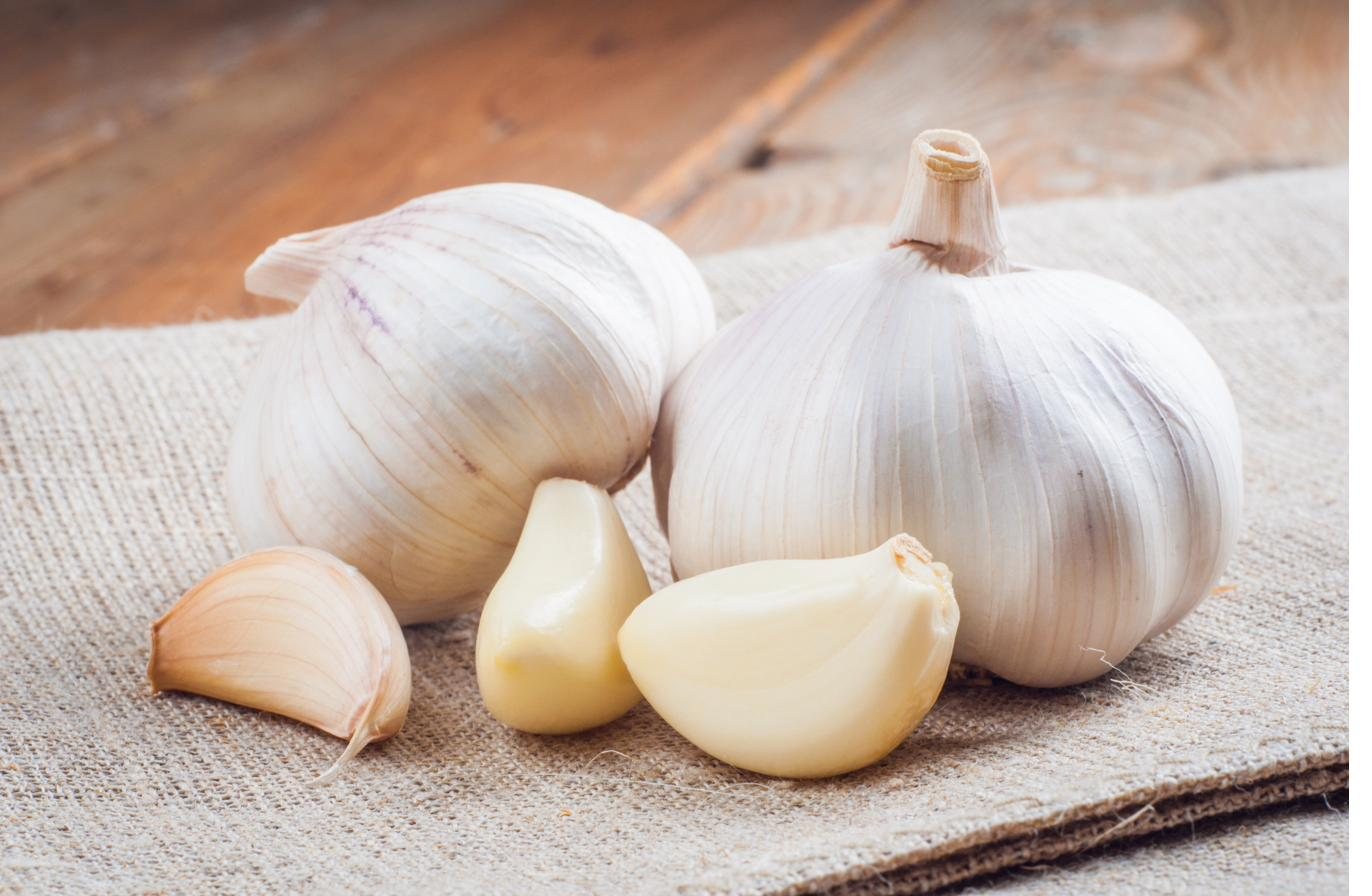
{{ q.a }}
Garlic amounts are really about taste. You’re the chef.
Roasted, caramelized, fermented, and raw garlic are almost different ingredients. The pairings below are for raw and raw-cooked garlic, though many work for roasted or braised garlic too.
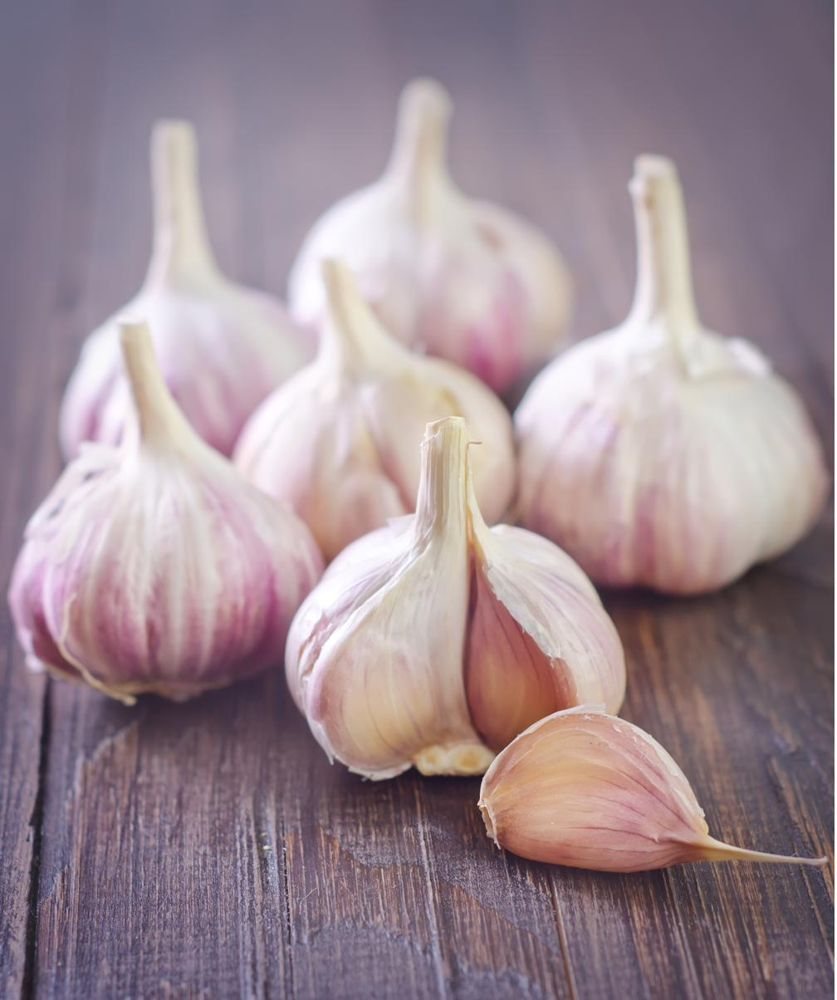
One head is about 10 cloves. One clove equals:
| {{ m.form }} | {{ m.amt }} |
What about garlic salt? It’s garlic powder and salt, usually about 3 parts salt to 1 part garlic, so 1 tsp holds roughly ¾ tsp salt. You can swap it for garlic, but cut the salt elsewhere in the recipe.
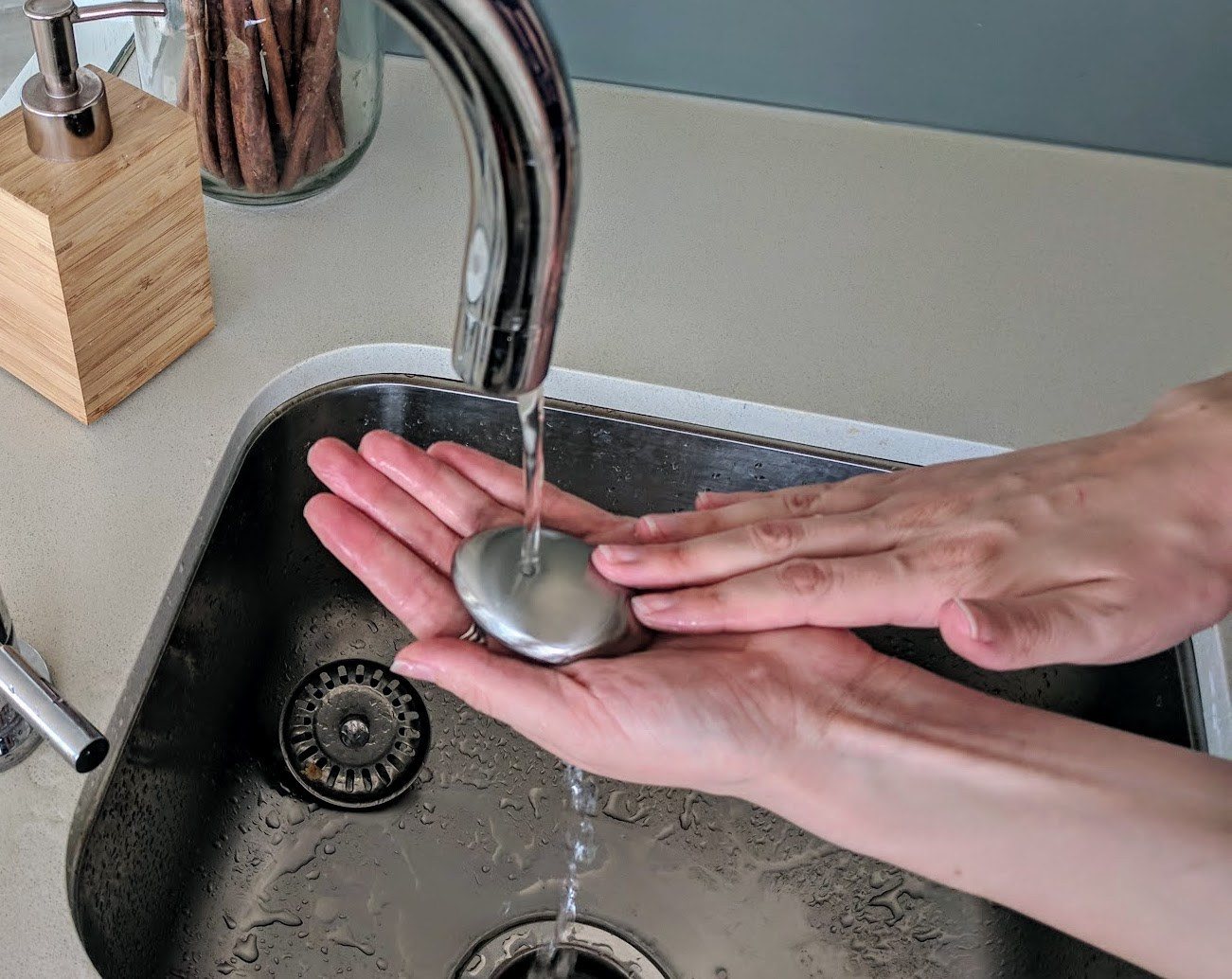
To get garlic off your hands, wash with soap and water, then rub your fingers against anything stainless steel, like the sink or a spoon. It neutralizes the smell.
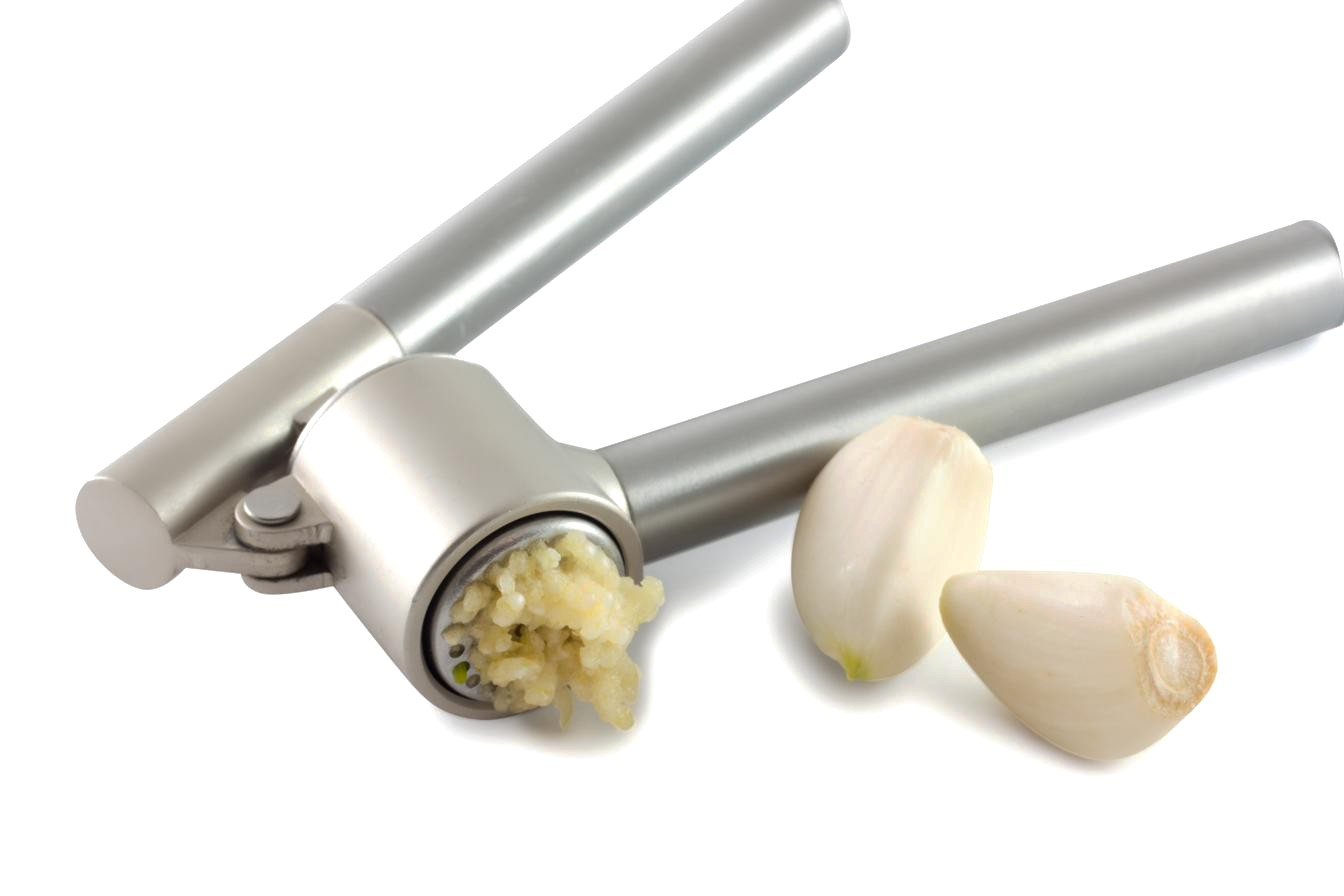
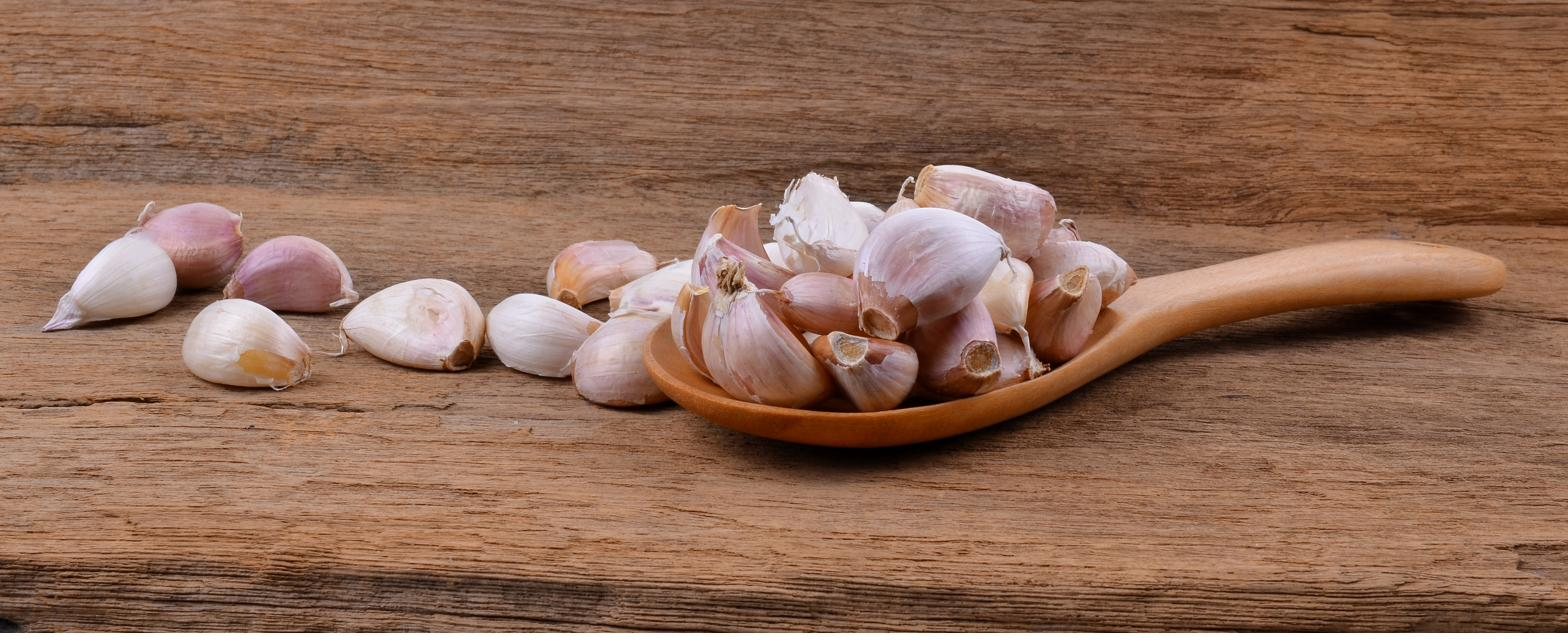
Peeling is the reason many home cooks skip fresh garlic. Don’t let it stop you.
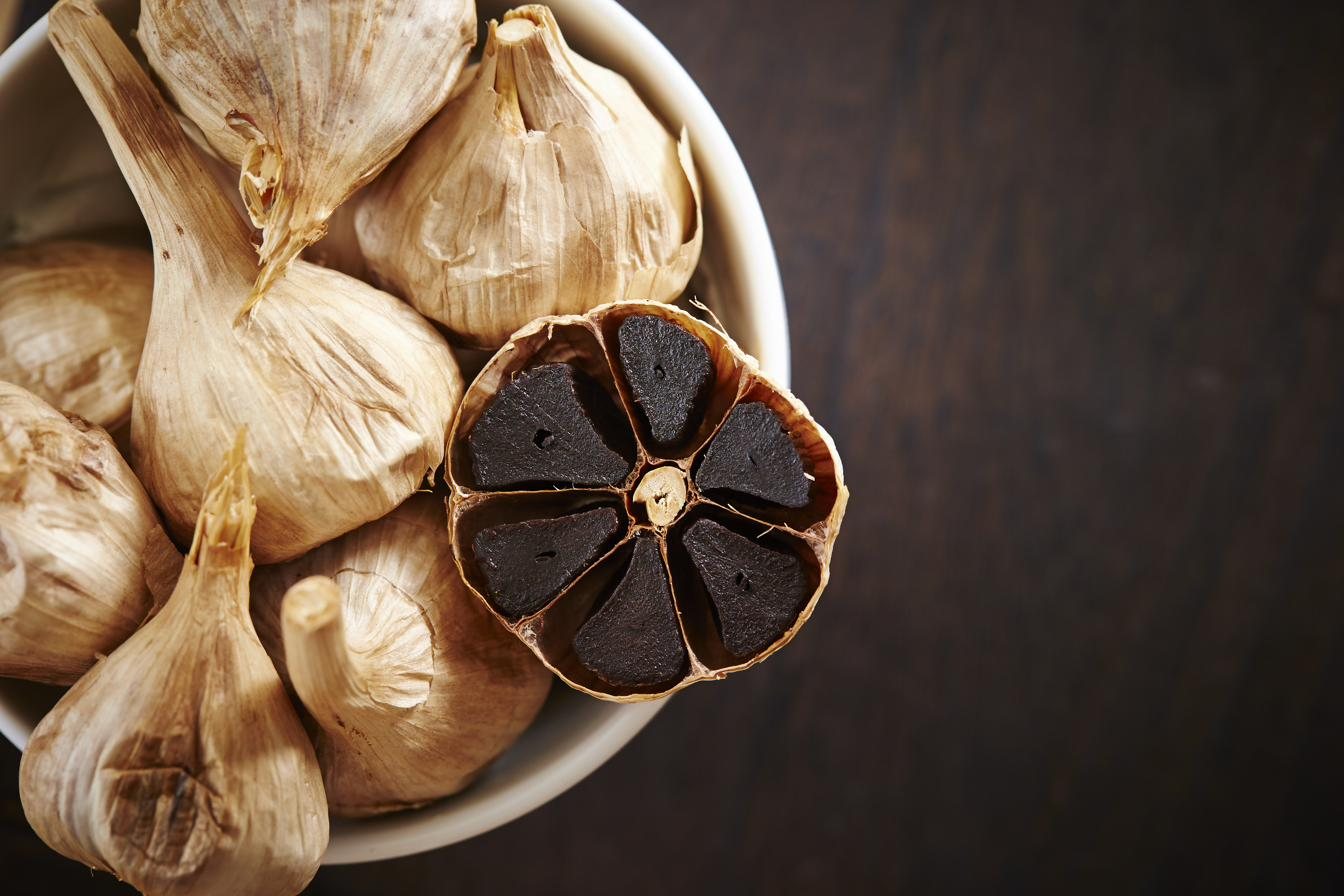
Ordinary garlic that has gone through a long fermentation. The flavor is anything but ordinary: truffle, licorice, molasses, chocolate, and balsamic. Use it as you would roasted garlic, anywhere a dish needs earthiness and depth.
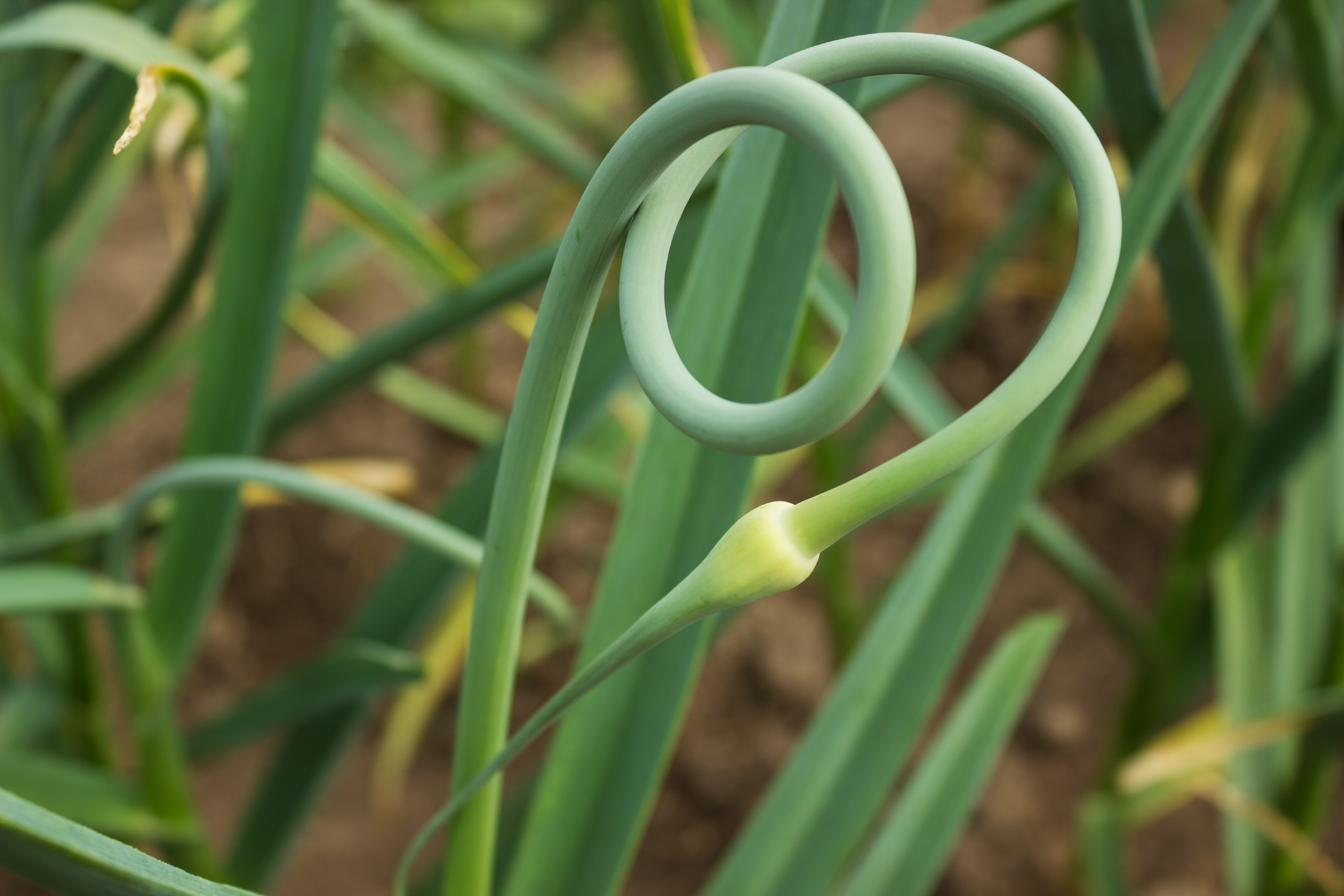
The tall, curling stalks of the garlic plant, sold seasonally at farmers markets. They taste of fresh garlic and mild onion, and you can grill, fry, pickle, steam, or eat them raw.
The word comes from the Old English “gar,” meaning spear. The Anglo-Saxons were likely thinking of the plant’s tall leaves, not the bulb we cook with.
{{ r.intro }}